


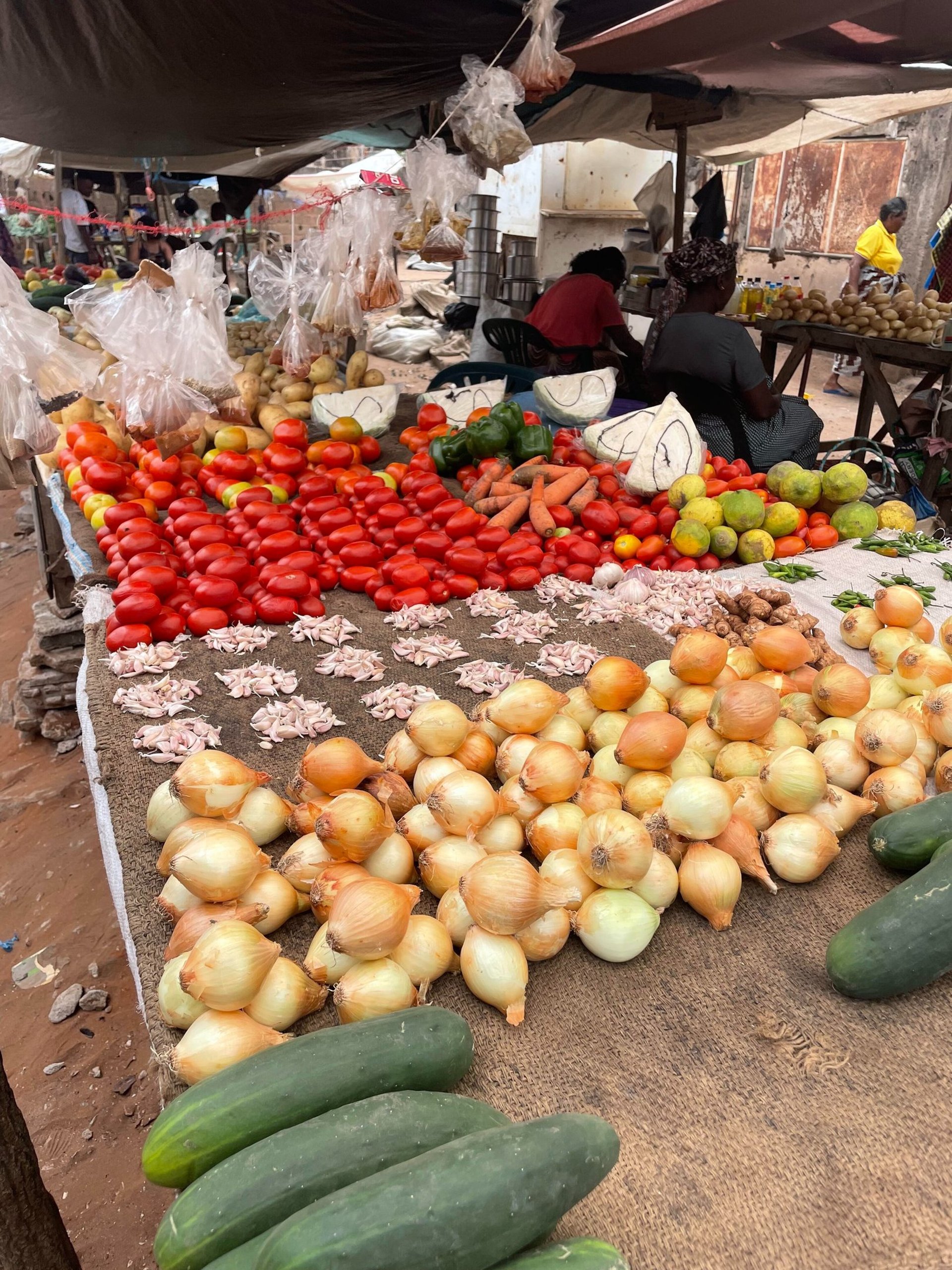
CHALLENGES AND RESILIENCE: THE EXPERIENCE OF WOMEN IN INFORMAL TRADE AT COMPONE MARKET
Research conducted at Compone Market
By Jossefina Langa
14 min read | Read the full article HERE.
Informal trade is a fundamental alternative for employment, income generation, and a survival strategy for many families excluded by limited skills, restricted access to the labor market, and unclear development policies.
-------------------------------------------------------------
This sector of activity emerged in response to basic needs stemming from the economic crisis exacerbated by the 16-year civil war Mozambique experienced shortly after independence. By the late 1980s, the country was facing a severe shortage of consumer goods, which stimulated the development of parallel markets and increased the prices of essential products, particularly in Maputo.
This situation suggests that there was a contraction of the economic state, combined with a population increase of up to 50%, resulting in significantly deteriorating living conditions. Challenges such as unemployment, limited access to education, clean water, transportation, and electricity, along with low wages, also forced many people to turn to informal markets as their only source of livelihood.
In this way, the emergence of informal markets is directly linked to socioeconomic vulnerability. The informal sector has grown significantly, increasing from 22.8% of total employment in 1987 to 50.7% in 2016. This growth is associated with rising unemployment and the scarcity of opportunities in the formal sector.
Women dominate the informal sector. Reality has shown that the idea that women’s roles are limited to domestic responsibilities is outdated. Women are explicitly represented in official statistics as the most economically active population, both in urban and rural areas. They drive the economy and contribute to the country’s growth, even through informal activities.
This predominance of women in the sector is also evident at Compone Market, located along Avenida Vladimir Lenine in the city of Maputo. In this article, we seek to portray some of the dynamics of these women, their contributions to household economies and family development, as well as the challenges they face within this sector of activity.
CONTEXT OF COMPONE MARKET
Compone Market is characterized by a strong female presence. Women sell vegetables, legumes, second-hand clothes and shoes, cleaning products, charcoal, firewood, cakes, bread, beauty products, and some operate more structured facilities, such as stalls, where they sell various food products and alcoholic beverages.
Zilpa Filipe, 42 years old, lives in the Mahotas neighbourhood with her husband and children. She is a vegetable vendor at Compone Market and represents an example of a woman who has relied on the informal sector for the past 10 years to support her family. She wakes up every day at 4:00 a.m. to go to the farm and collect the vegetables she sells at Compone Market. To transport her products, she relies on the support of goods transporters using simple open-bed pickup vehicles, known locally as “caixa aberta”, which generally charge between 50 and 100 meticais, depending on the quantity of goods being transported. She usually arrives at the market at 7:00 a.m., and her selling activities at the market end at 5:00 p.m.
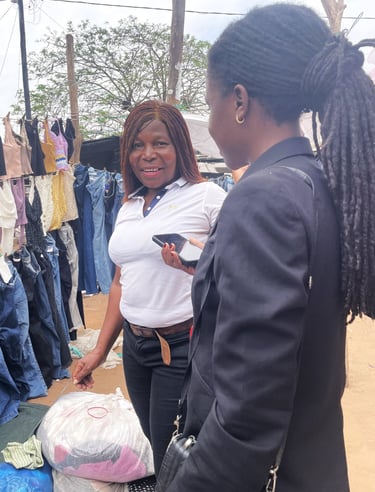
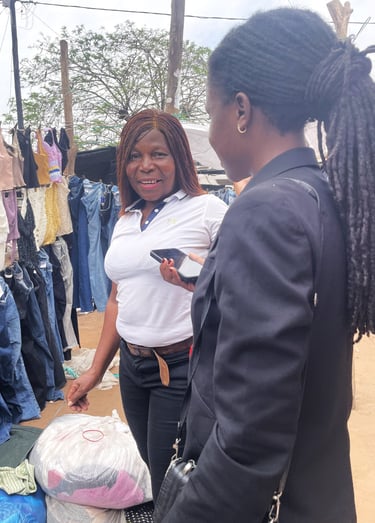
In her own words:
I chose informal trade because I saw it as a strategy to generate income and help my husband with household expenses. Before starting my business, I faced many financial difficulties, as only my husband was working and we have a sick child who requires medication that we purchase every month. The medication is expensive, and my husband’s salary was not enough to cover all the basic household expenses.




Ana, 54. Vendor at Compone Market.
She wakes up every day at 4:00 a.m. to go to the farm and collect the vegetables she sells at Compone Market. To transport her products, she relies on the support of goods transporters using simple open-bed pickup vehicles, locally known as “caixa aberta”, who generally charge between 50 and 100 meticais, depending on the quantity of goods being transported.
She usually arrives at the market at 7:00 a.m., and her selling activities end at 5:00 p.m. In addition to vegetables, she sells seasonal fruits and produce. She also goes to Zimpeto Wholesale Market to purchase larger quantities of products, as it is not possible to go to both the farm and the wholesale market on the same day. The products she usually sells include vegetables (such as cabbage, lettuce, and leafy greens), cassava, sweet potatoes, and fruits (such as bananas, oranges, and mangoes).
Besides being a vendor, she is also a homemaker. After finishing her activities at the market, she goes to her mother’s house to pick up her children, who remain under her mother’s care while she is working. At home, she performs household tasks, cooks, cleans, and organizes everything to reduce her workload the following day, considering that she leaves home at 4:00 a.m.
She has a sick child, and it has been difficult for her to leave the child in her mother’s care in order to go to the market. There are days when she leaves home knowing that her child is not well and, at times, she returns earlier than usual to provide care and support. Despite these challenges, she explains that being at the market is better than staying at home, as the income from her sales allows her to support her husband with household expenses and contribute to purchasing her child’s medication.
BETWEEN CHALLENGES AND TRIUMPHS
Learn more about Zilpa and other women vendors at Compone Market in the full article by clicking HERE.
Despite its growth, the informal sector faces challenges such as a lack of infrastructure, limited access to credit, and unfair competition (often from informal vendors whose activities undermine businesses that contribute to the local economy and operate from established market stalls). The government has implemented policies to support the sector, but much remains to be done.
The interviewed women expressed concerns about the existence of fees charged to vendors, even in a space that is not officially designated for commercial activities. They consider this practice an irregularity in market management, as it does not contribute to improving the working conditions of vendors.
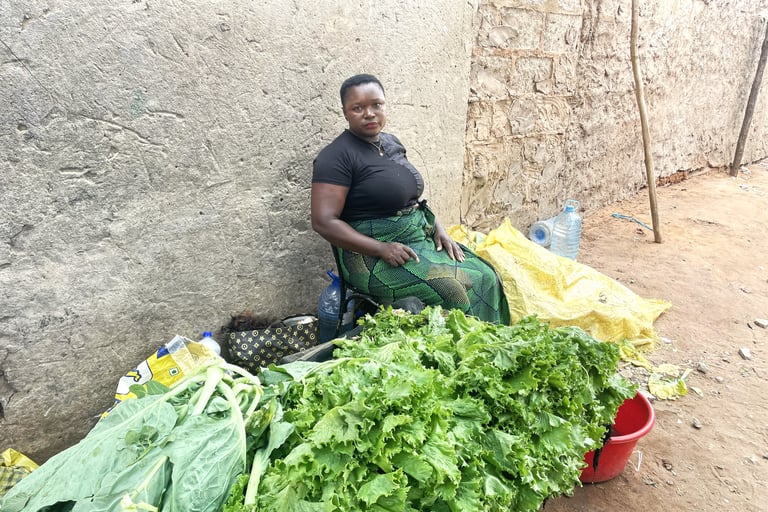
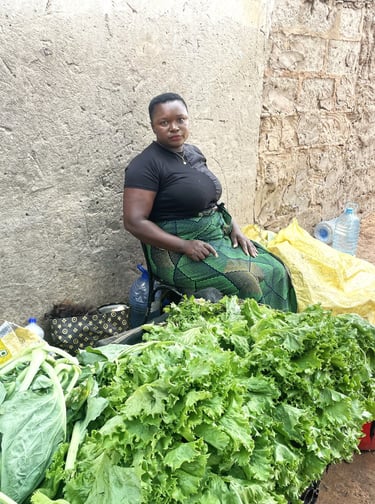


The municipal police officers say that because I sell my products next to the market, I cannot have a permanent stall. As a result, my stall has to be dismantled every day, and I pay 30 meticais daily to those who provide these services.
Afirma Zilpa, 42.
Creating emergency funds for business purposes, even without following formal technical or scientific methods, is a common practice among women at Compone Market. All of them use similar approaches, although in different ways: group savings or Xitique. Laura uses both methods. In addition to participating in a group savings scheme, she contributes to a daily Xitique of 100 meticais and a monthly Xitique of 1,000 meticais with a group of colleagues. During difficult moments, she relies on these savings schemes, weekly group savings, and has also resorted to informal lenders (agiotas).
Laura states that she does not have good memories of dealing with informal lenders. When she borrowed 20,000 meticais to invest in her business, she was unable to repay the amount due to poor sales of the products purchased with the money, and her belongings were seized as collateral. Laura says she feels fulfilled seeing her children grown and educated, and identifies her greatest challenges in the market as the lack of financing and unfair competition among vendors. According to her:
"Everyone is free to set the price of their products, and some vendors set prices much lower than others. This practice sometimes harms other vendors. I would like to obtain financing in order to expand my business and improve my working conditions," Laura added.
Informal women vendors face frequent challenges, but they continue to find ways to improve their lives through informal trade. For most of them, this activity is their main source of income, allowing them to support their families and meet basic needs.
Ana stated:
"The benefits have been many. When I started selling second-hand clothing (roupas do fardo), I did not have a house. I was able to build and furnish my home, pay for my children’s education because I am a single mother, and today I help support my grandchildren."
Zilpa also shared:
"I helped my husband build and furnish our home, cover household expenses, and I am still able to support my mother, who takes care of my children when I come to sell at the market."
"I was able to support my children and pay for their education. When my daughter passed away, I took responsibility for my granddaughter, and today I pay for her schooling," said Laura, 61.
Learn more about the stories of other women vendors at Compone Market in the full article by clicking HERE.
FINANCING: A DISTANT DREAM
Regarding access to financing, we found a scarcity of official sources (such as bank credit), mainly due to the lack of the required collateral. Informal women vendors feel excluded from the banking sector. To change this situation, the government should create conditions to formalize these activities, which could allow their revenues to be accounted for and registered, contributing to increased state revenue collection.
Therefore, informal sector participants turn to alternative sources of funding to start and expand their businesses, such as family financial contributions and Xitique, a collective savings system based on regular contributions of monetary amounts, which allows group members to access, on a rotating basis, larger sums of money for specific purchases of goods.
"We do not have access to financing. As a way of saving to expand our businesses, we participate in daily, weekly, and monthly Xitiques. When the business declines, we use the money from the Xitique to purchase goods," said Zilpa.
There is a relationship between Xitique and socioeconomic structures, particularly in the creation of solidarity networks and in supporting household economies. Xitique schemes represent a strategy through which members ensure mutual assistance during periods of financial crisis, including situations involving deaths, illnesses, house construction, and property acquisition. These investments are economic in nature and range from building houses and warehouses to the continuous expansion of businesses.
It was reported that, when their businesses experience a downturn, vendors have the possibility of taking products on credit, selling them, keeping their income, and repaying the amount owed to the product supplier. As Zilpa explains:
"Today I had nothing to sell, so I went to get vegetables from the supplier. At the end of the day, I will take my earnings and repay the amount owed to the supplier. This is how I manage to survive."
Maria Sitoe, 54 years old, lives in the Matendene neighbourhood with her husband and has two grown and married daughters. Her husband is a private driver. She started selling at Compone Market 15 years ago, influenced by her sister-in-law. At the time, she was a street vendor selling apples in downtown Maputo, and the market became a refuge because her daily life on the streets was not easy. She faced the heat, rain, cold weather, and constant harassment from municipal police […]
-------------------------------------------------------------------------------------------------------------------------------------------------
Overall, speaking with women vendors at Compone Market allowed us to understand that women in informal trade are recognized for their resilience in the face of the challenges they encounter, including limited access to financing, poor infrastructure, unfair competition, the lack of policies that protect them, insecurity in the market, and constant harassment by municipal authorities. Resilience, adaptability, and the ability to reinvent themselves are their defining characteristics. They manage to sustain their businesses and make significant contributions to the stability of their households, the development of the local and national economy, and poverty reduction. Women’s empowerment is one of the main achievements associated with informal trade. By becoming entrepreneurs, women generate income and gain financial autonomy, enabling them to support their families and make important decisions regarding their own well-being and that of their households. Through the implementation of savings groups, they create networks of solidarity where they share knowledge and resources, strengthening the social fabric within their communities. Women contribute to the circulation of money, create employment opportunities for other community members, and foster innovation and creativity by developing new products and services that respond to local needs. With adequate support and resources, and with their needs properly addressed, women can continue to build their own paths and leave lasting footprints in their journeys toward personal development and the advancement of the country’s economy.
Click HERE to read the complete and fully referenced article.
Sector de Estudos e Pesquisa | C.I
Jossefina Langa | Dário Resende
In her own words:
24 NOV 2025 - MAPUTO
Contactos
+258 83 421 7659
info@muthianavoice.org


Siga-nos
Copyright © 2026 Muthiana Voice. Todos os direitos reservados.